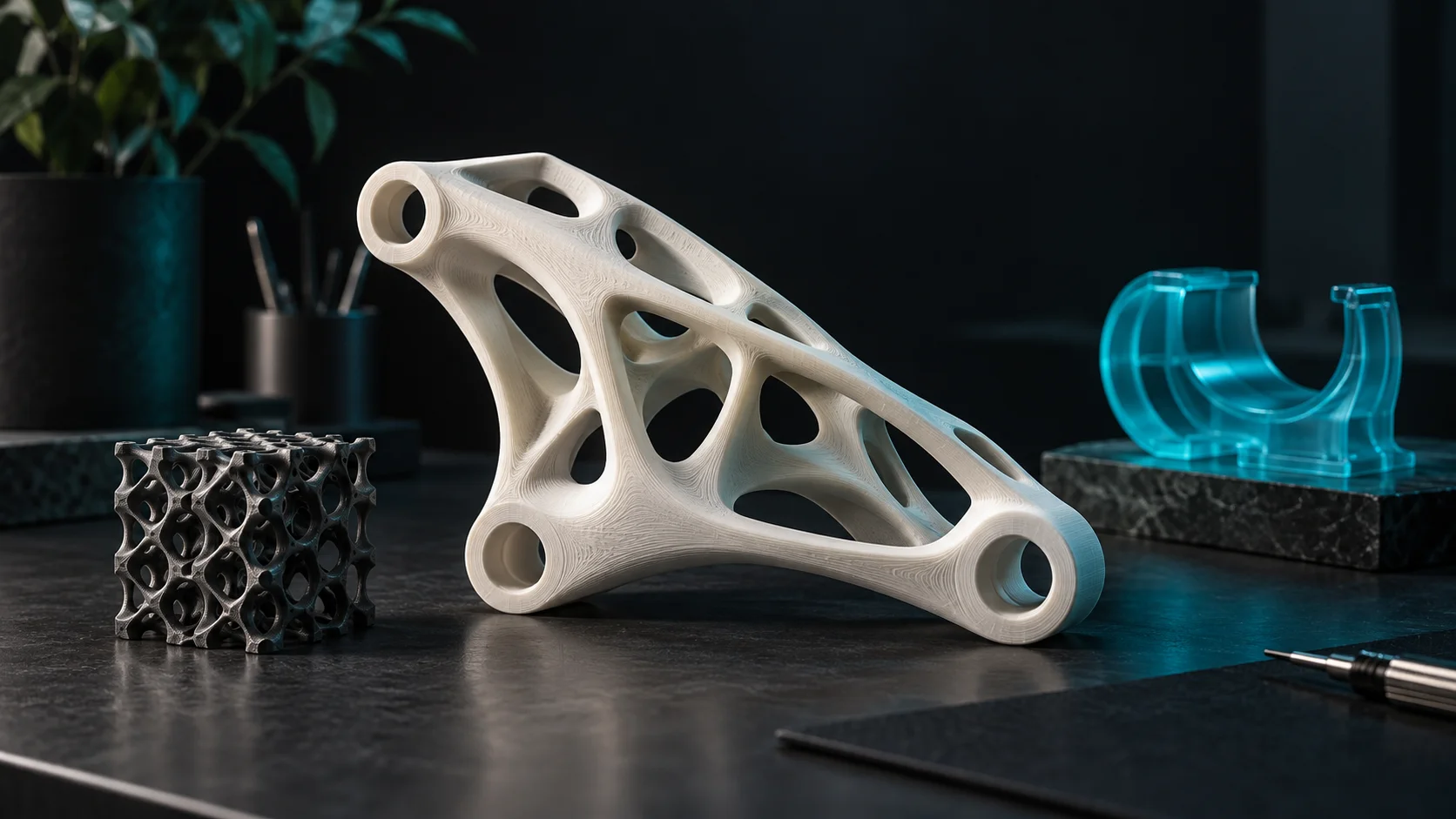
What is PLA, and why is it considered an environmentally friendly material?
PLA is a bioplastic made from renewable resources such as corn starch, sugar cane or potato starch. Compared with conventional petroleum-based plastics, its production can require fewer fossil resources and produce lower CO₂ emissions, making it an option for those seeking more sustainable alternatives.
PLA can biodegrade under specific conditions, such as those found in industrial composting facilities. This distinguishes it from many conventional plastics that persist in the environment for long periods.
PLA and 3D printing: why is it so popular?
PLA is well suited to 3D printing for several reasons:
- Easy printing: PLA prints at relatively low temperatures (190–220 °C), which can reduce energy use and wear on the printer.
- Low odour: PLA generally produces less noticeable odour than some other printing plastics, making it a common choice for home use.
- High detail quality: Its properties allow sharp, clean lines.
- A wide colour range: PLA is available in many colours and finishes, including matt, gloss and metallic effects.
Environmental promise versus reality: how sustainable is PLA?
Although PLA is often described as environmentally friendly, its breakdown requires specific conditions, including the high temperatures and humidity found mainly in industrial composting facilities. It does not normally biodegrade in a home environment or landfill.
Recycling is another challenge. PLA should not be mixed with conventional plastic recycling, as it may contaminate the process. Infrastructure for recycling or composting it is not available everywhere.
Using PLA more sustainably
For PLA to be a more sustainable choice, it needs to be used thoughtfully.
Here are some practical tips:
- Minimise waste: Prepare the model carefully before printing to avoid wasting material.
- Recycle leftovers: Machines are available that can turn waste PLA into new printing filament.
- Use specialist composting facilities: Damaged or unused PLA products may be accepted by specialist composting facilities where these are available.
- Upcycling: Old PLA models can be creatively reused to make new objects.
The future of PLA in 3D printing
Developments in bioplastics are opening up possibilities for more sustainable materials. Researchers are working to improve PLA’s ability to biodegrade under everyday conditions. Composite PLA filaments combining bioplastic with natural materials such as wood or bamboo are also expanding its applications.
Conclusion
PLA is an accessible material with potential environmental benefits. It is not perfect, but thoughtful use can support more sustainable resource consumption. With appropriate handling and recycling, it can be a useful choice for hobbyists and businesses seeking alternative production methods.
Responsible use of PLA and support for better material technologies can help protect resources for future generations.